Fire sprinkler systems
Wet-pipe, dry-pipe, pre-action and suitable special arrangements for automatic fire control within buildings and storage areas.
Explore fire sprinklers →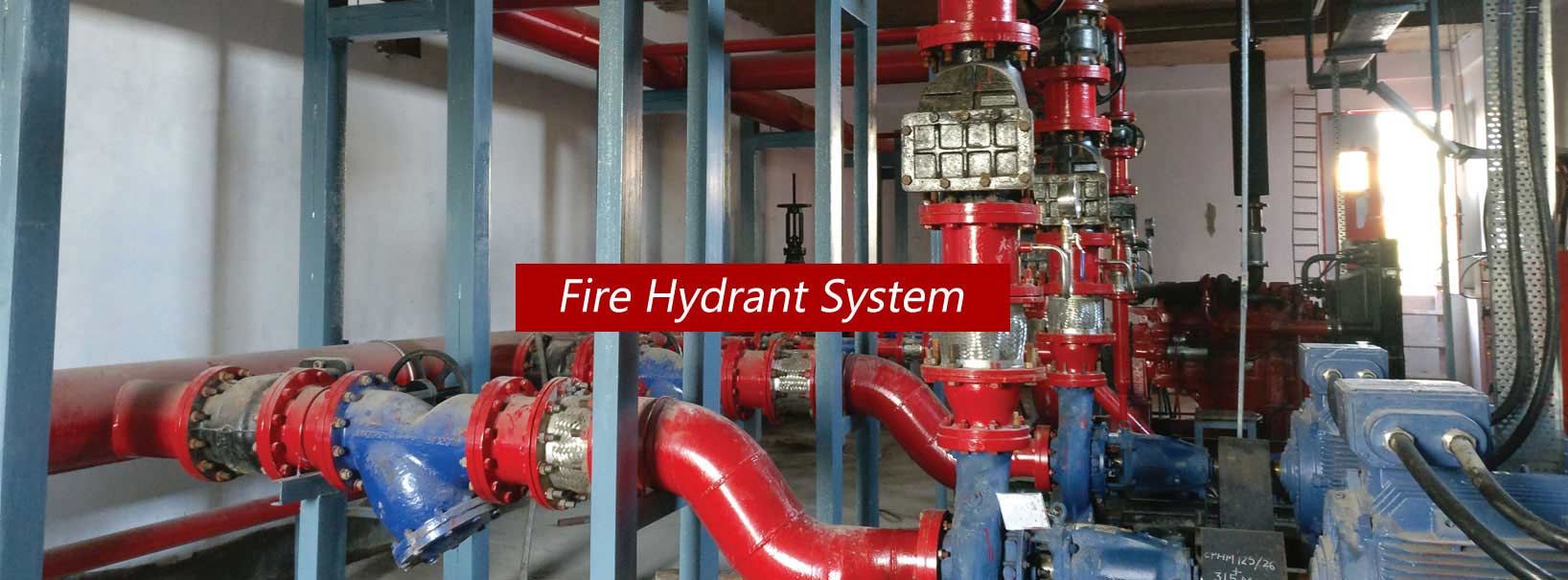
Design, supply, installation, testing, commissioning and maintenance of sprinkler, hydrant, water mist, deluge, MVWS and HVWS systems for industrial, commercial, institutional and residential risks.
A water-based fire suppression system is an engineered network that detects, controls or extinguishes a fire by delivering water through sprinklers, hydrants, hose reels, monitors, mist nozzles, deluge valves or spray nozzles.
Water absorbs heat, cools burning surfaces, limits fire spread and can protect nearby equipment from radiant heat. The correct arrangement depends on the occupancy, fire load, fuel type, storage height, process equipment, available water supply and applicable approval requirements.
Vintex Fire supports complete project delivery—from preliminary risk review and hydraulic design coordination to equipment supply, installation, testing, commissioning, handover documentation and preventive maintenance.
One site may need several coordinated systems. Vintex develops the solution around the hazard rather than forcing every risk into one technology.
Wet-pipe, dry-pipe, pre-action and suitable special arrangements for automatic fire control within buildings and storage areas.
Explore fire sprinklers →Fire pumps, water storage, ring mains, landing valves, hose boxes, hose reels, breeching inlets, monitors and accessories.
Explore hydrant equipment →Fine water droplets provide efficient heat absorption and can reduce water demand in applications specifically designed for mist protection.
Explore water mist →Fast, simultaneous discharge through open nozzles for high-hazard areas requiring rapid fire control or exposure protection.
Explore deluge valves →Medium-velocity water spray systems for cooling, exposure protection and selected combustible-liquid or process hazards.
Explore MVWS & HVWS systems →High-velocity water spray protection commonly considered for transformers, oil-filled equipment and other engineered hazards.
Explore MVWS & HVWS systems →Review occupancy, fire load, building configuration, process hazards, water availability and approval needs.
Prepare design basis, equipment selection, layouts, hydraulic criteria and coordinated project documentation.
Provide pumps, valves, piping, nozzles, sprinklers, hydrants, controls and associated approved equipment.
Conduct flushing, pressure tests, functional checks, flow verification and system handover procedures.
Support routine inspection, preventive maintenance, corrective service, documentation and operator training.
These systems protect a wide range of occupancies when water is compatible with the hazard and a dependable water supply is available.
The table provides a practical starting point. Final selection requires a project-specific fire-risk and hydraulic assessment.
| System | Primary purpose | Typical activation | Common applications |
|---|---|---|---|
| Automatic sprinkler | Control or suppress a developing fire near its origin | Heat-responsive sprinkler operation | Buildings, warehouses, production and storage |
| Hydrant and hose reel | Provide manual firefighting water at the site | Manual operation by trained personnel or responders | Industrial, commercial, institutional and residential premises |
| Water mist | Rapid heat absorption with fine droplets and lower water demand | Automatic or manual, depending on design | Selected machinery, heritage, marine and enclosed risks |
| Deluge | Apply water simultaneously across a hazard area | Detection system opens a deluge valve | High-hazard process areas and exposure protection |
| MVWS / HVWS | Cool, control or protect specific equipment and exposures | Automatic or manual deluge operation | Transformers, tanks, process equipment and industrial hazards |
Water-based fire systems should be engineered in coordination with the building use, fire authority requirements, insurer criteria, client specifications and applicable Indian or internationally recognised standards specified for the project.
Design considerations include hazard classification, discharge density, design area, pump capacity, water-storage duration, pipe sizing, pressure availability, equipment listing or approval, alarm interfaces, inspection access and long-term maintainability.
Important: Product selection and system sizing must be confirmed by competent fire-protection professionals using site-specific information. Website content is general guidance and is not a substitute for approved engineering documents.
Vintex supports enquiries across all 28 states and 8 union territories. The cities below are principal service and industrial locations; surrounding cities and districts can be considered based on project scope and logistics.
Visakhapatnam, Vijayawada, Guntur, Tirupati, Nellore, Kurnool, Rajahmundry and Kakinada.
Itanagar, Naharlagun, Pasighat, Tawang, Ziro and Bomdila.
Guwahati, Dibrugarh, Silchar, Jorhat, Tezpur, Tinsukia and Nagaon.
Patna, Gaya, Muzaffarpur, Bhagalpur, Darbhanga, Purnia and Bihar Sharif.
Raipur, Bhilai, Durg, Bilaspur, Korba, Raigarh and Jagdalpur.
Panaji, Margao, Vasco da Gama, Mapusa and Ponda.
Ahmedabad, Surat, Vadodara, Rajkot, Gandhinagar, Bharuch, Vapi, Jamnagar and Bhavnagar.
Gurugram, Faridabad, Panipat, Sonipat, Ambala, Karnal, Hisar and Manesar.
Shimla, Dharamshala, Solan, Baddi, Mandi, Kullu and Una.
Ranchi, Jamshedpur, Dhanbad, Bokaro, Deoghar and Hazaribagh.
Bengaluru, Mysuru, Mangaluru, Hubballi-Dharwad, Belagavi, Ballari, Tumakuru and Davanagere.
Thiruvananthapuram, Kochi, Kozhikode, Thrissur, Kollam, Kannur, Alappuzha and Palakkad.
Indore, Bhopal, Jabalpur, Gwalior, Ujjain, Sagar, Satna and Dewas.
Mumbai, Thane, Navi Mumbai, Pune, Nagpur, Nashik, Chhatrapati Sambhajinagar, Kolhapur, Solapur, Palghar and Raigad.
Imphal, Thoubal, Bishnupur and Churachandpur.
Shillong, Tura, Jowai and Nongpoh.
Aizawl, Lunglei, Champhai and Kolasib.
Dimapur, Kohima, Mokokchung and Wokha.
Bhubaneswar, Cuttack, Rourkela, Sambalpur, Berhampur, Puri, Balasore and Jharsuguda.
Ludhiana, Amritsar, Jalandhar, Mohali, Patiala, Bathinda and Pathankot.
Jaipur, Jodhpur, Udaipur, Kota, Ajmer, Bikaner, Alwar, Neemrana and Bhilwara.
Gangtok, Namchi, Gyalshing, Mangan and Rangpo.
Chennai, Coimbatore, Madurai, Tiruchirappalli, Salem, Tiruppur, Hosur, Vellore and Thoothukudi.
Hyderabad, Secunderabad, Warangal, Karimnagar, Nizamabad, Khammam and Sangareddy.
Agartala, Udaipur, Dharmanagar and Kailasahar.
Lucknow, Noida, Greater Noida, Ghaziabad, Kanpur, Agra, Varanasi, Prayagraj, Meerut, Gorakhpur and Bareilly.
Dehradun, Haridwar, Roorkee, Haldwani, Rudrapur and Rishikesh.
Kolkata, Howrah, Durgapur, Asansol, Siliguri, Haldia and Kharagpur.
Port Blair and other project locations across the islands, subject to logistics.
Chandigarh, Mohali, Panchkula and the adjoining Tricity region.
Silvassa, Daman and Diu.
New Delhi, Central Delhi, North Delhi, South Delhi, East Delhi, West Delhi and NCR project locations.
Srinagar, Jammu, Anantnag, Baramulla, Kathua and Udhampur.
Leh and Kargil, subject to project conditions and logistics.
Kavaratti and other project locations, subject to logistics.
Puducherry, Karaikal, Mahe and Yanam.
Use these answers as a starting point, then speak with Vintex for a project-specific recommendation.
It is an engineered system that detects, controls or extinguishes fire using water delivered through sprinklers, hydrants, hose reels, water mist, deluge or spray equipment.
Automatic sprinklers are commonly considered for warehouses, but the design depends on commodity type, storage arrangement, rack configuration, storage height, ceiling height, water supply and applicable project criteria.
Engineered HVWS or other water-spray arrangements may be used for oil-filled transformers and related exposure protection. The system must be designed for the specific equipment and hazard.
A hydrant system supplies water for manual firefighting, while an automatic sprinkler system operates locally in response to heat. Many facilities require both systems as complementary layers of protection.
Water mist typically uses finer droplets and may require less water in approved, suitable applications. It is not a universal substitute for sprinklers; performance and suitability must be established for the hazard.
Vintex can support inspection, pump testing, valve checks, system functional testing, preventive maintenance, corrective service and documentation, subject to the installed system and service scope.
Yes. Enquiries are supported across India, including all states and union territories, subject to project assessment, logistics and local coordination.
Share the site location, building use, drawings if available, hazard details, water-supply information and required project scope through the Vintex contact page or by phone.
Discuss your hazard, site, water supply and project scope with the Vintex team.
