

Vapour separation
A stable foam blanket can separate the liquid-fuel surface from air and reduce the release of flammable vapours.
Vintex supports project-specific foam solutions for suitable flammable-liquid, fuel-storage, process and industrial hazards—from hazard review and supply to installation, testing and commissioning.
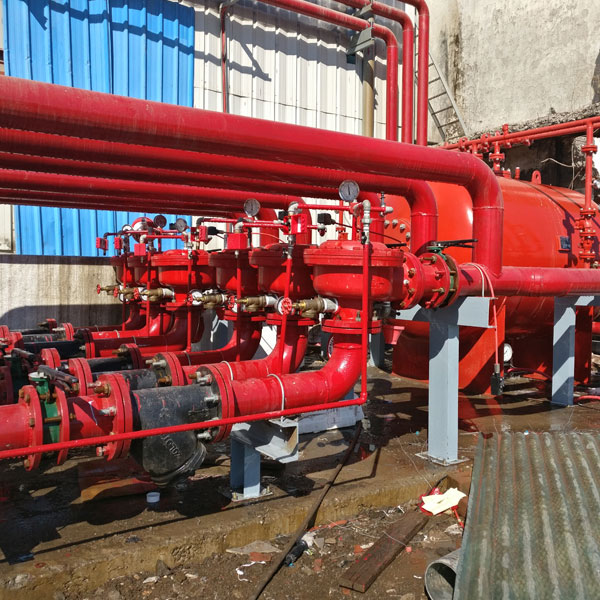
A foam system combines water with a compatible foam concentrate in a controlled proportion. Air is introduced to form finished foam at the discharge arrangement. For a suitable hazard, the foam blanket can separate fuel vapour from air, cool the fuel surface, suppress flames and help resist re-ignition.
Foam selection is application-specific. The concentrate must be compatible with the fuel, whether hydrocarbon or water-miscible polar solvent, and with the proportioning and discharge equipment. Environmental requirements, containment, drainage and disposal also need consideration in the project design.
The dominant effect varies with foam type, fuel, application method and system design.
A stable foam blanket can separate the liquid-fuel surface from air and reduce the release of flammable vapours.
Correct application helps move foam across the hazard surface and suppress the combustion zone without excessive disturbance.
The water content absorbs heat and cools exposed fuel, equipment and nearby surfaces as permitted by the application.
Maintaining an effective blanket can limit vapour release and help protect the surface after flame knockdown.
Suitability must be confirmed for the actual fuel, hazard, foam concentrate, discharge method and approval basis.
The package is configured around the hazard and may use fixed monitors, chambers, pourers, sprinklers, generators, nozzles or other approved discharge arrangements.
Vintex accepts enquiries across all 28 states and 8 union territories, subject to technical suitability, project scope, site conditions and logistics.
Visakhapatnam, Vijayawada, Guntur, Tirupati, Nellore, Kurnool, Rajahmundry and Kakinada.
Itanagar, Naharlagun, Pasighat, Tawang, Ziro and Bomdila.
Guwahati, Dibrugarh, Silchar, Jorhat, Tezpur, Tinsukia and Nagaon.
Patna, Gaya, Muzaffarpur, Bhagalpur, Darbhanga, Purnia and Bihar Sharif.
Raipur, Bhilai, Durg, Bilaspur, Korba, Raigarh and Jagdalpur.
Panaji, Margao, Vasco da Gama, Mapusa and Ponda.
Ahmedabad, Surat, Vadodara, Rajkot, Gandhinagar, Bharuch, Vapi, Jamnagar and Bhavnagar.
Gurugram, Faridabad, Panipat, Sonipat, Ambala, Karnal, Hisar and Manesar.
Shimla, Dharamshala, Solan, Baddi, Mandi, Kullu and Una.
Ranchi, Jamshedpur, Dhanbad, Bokaro, Deoghar and Hazaribagh.
Bengaluru, Mysuru, Mangaluru, Hubballi-Dharwad, Belagavi, Ballari, Tumakuru and Davanagere.
Thiruvananthapuram, Kochi, Kozhikode, Thrissur, Kollam, Kannur, Alappuzha and Palakkad.
Indore, Bhopal, Jabalpur, Gwalior, Ujjain, Sagar, Satna and Dewas.
Mumbai, Thane, Navi Mumbai, Pune, Nagpur, Nashik, Chhatrapati Sambhajinagar, Kolhapur, Solapur, Palghar and Raigad.
Imphal, Thoubal, Bishnupur and Churachandpur.
Shillong, Tura, Jowai and Nongpoh.
Aizawl, Lunglei, Champhai and Kolasib.
Dimapur, Kohima, Mokokchung and Wokha.
Bhubaneswar, Cuttack, Rourkela, Sambalpur, Berhampur, Puri, Balasore and Jharsuguda.
Ludhiana, Amritsar, Jalandhar, Mohali, Patiala, Bathinda and Pathankot.
Jaipur, Jodhpur, Udaipur, Kota, Ajmer, Bikaner, Alwar, Neemrana and Bhilwara.
Gangtok, Namchi, Gyalshing, Mangan and Rangpo.
Chennai, Coimbatore, Madurai, Tiruchirappalli, Salem, Tiruppur, Hosur, Vellore and Thoothukudi.
Hyderabad, Secunderabad, Warangal, Karimnagar, Nizamabad, Khammam and Sangareddy.
Agartala, Udaipur, Dharmanagar and Kailasahar.
Lucknow, Noida, Greater Noida, Ghaziabad, Kanpur, Agra, Varanasi, Prayagraj, Meerut, Gorakhpur and Bareilly.
Dehradun, Haridwar, Roorkee, Haldwani, Rudrapur and Rishikesh.
Kolkata, Howrah, Durgapur, Asansol, Siliguri, Haldia and Kharagpur.
Port Blair and other project locations across the islands, subject to logistics.
Chandigarh, Mohali, Panchkula and the adjoining Tricity region.
Silvassa, Daman and Diu.
New Delhi, Central Delhi, North Delhi, South Delhi, East Delhi, West Delhi and NCR project locations.
Srinagar, Jammu, Anantnag, Baramulla, Kathua and Udhampur.
Leh and Kargil, subject to project conditions and logistics.
Kavaratti and other project locations, subject to logistics.
Puducherry, Karaikal, Mahe and Yanam.
Use these answers as planning guidance. Final requirements depend on the fuel, approved concentrate and hardware, project design, site conditions and applicable requirements.
A foam fire suppression system combines water and compatible foam concentrate in a controlled proportion and introduces air at the discharge device to form finished foam. For suitable hazards, the foam blanket can suppress fire, separate fuel vapour from air, cool surfaces and help resist re-ignition.
Foam systems are commonly considered for suitable flammable or combustible liquid hazards such as storage tanks, loading areas, process units, bunds, hangars and selected warehouses. The fuel, application method and approved concentrate must be compatible.
These categories describe how much finished foam is produced from a volume of foam solution. Expansion selection depends on the hazard, required application method, enclosure and approved system design.
No. Foam concentrate selection depends on the fuel type, including whether it is a hydrocarbon or water-miscible polar solvent, plus the discharge device, system listing or approval and project requirements.
Useful inputs include fuel data, tank or hazard dimensions, layout drawings, containment and drainage, water supply, application method, project specifications, site location and required scope.
Vintex accepts foam fire suppression enquiries across all Indian states and union territories, subject to technical suitability, project scope, site conditions and logistics.
Share the fuel data, hazard dimensions, drawings, water supply, project location, specification and required scope for technical review.