

Cooking appliances
Fryers, griddles, ranges, broilers, charbroilers, woks and other specified cooking equipment.
Vintex provides project-specific kitchen fire suppression solutions for commercial cooking appliances, hoods, plenums, filters and extraction ducts—from planning and supply to installation, testing and support.
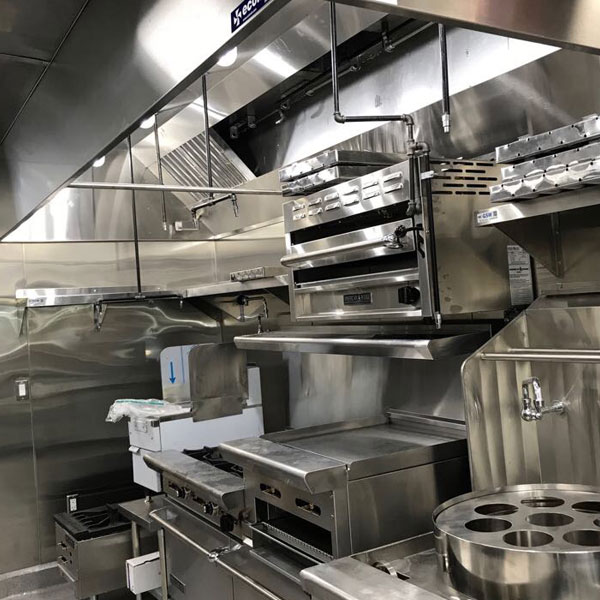
A kitchen fire suppression system is an automatic system designed to detect and suppress fire in commercial cooking equipment and the associated ventilation path. When the detection arrangement operates, the system releases extinguishing agent through purpose-positioned nozzles and can activate specified interlocks. A manual release provides an additional means of operation.
It is used where high-temperature cooking oils, grease deposits and open cooking processes create a fire risk that needs dedicated protection. The final configuration must match the appliances, hood and duct arrangement, site conditions and approved fire-safety design.
Coverage is engineered around the actual commercial kitchen layout; protected items may include the following.
Fryers, griddles, ranges, broilers, charbroilers, woks and other specified cooking equipment.
Appliance hoods and enclosed plenum spaces where heat, vapour and grease can accumulate.
Grease filters and extraction duct sections included within the approved protection design.
Specified fuel or electrical shut-off, alarm signalling and other cause-and-effect functions.
Project support is available for new installations, upgrades and kitchen-layout changes.
Vintex can support a defined package or a wider project scope, depending on the site and tender requirements.
We accept enquiries across all 28 states and 8 union territories. Delivery, installation and support are subject to project scope, site conditions and logistics.
Visakhapatnam, Vijayawada, Guntur, Tirupati, Nellore, Kurnool, Rajahmundry and Kakinada.
Itanagar, Naharlagun, Pasighat, Tawang, Ziro and Bomdila.
Guwahati, Dibrugarh, Silchar, Jorhat, Tezpur, Tinsukia and Nagaon.
Patna, Gaya, Muzaffarpur, Bhagalpur, Darbhanga, Purnia and Bihar Sharif.
Raipur, Bhilai, Durg, Bilaspur, Korba, Raigarh and Jagdalpur.
Panaji, Margao, Vasco da Gama, Mapusa and Ponda.
Ahmedabad, Surat, Vadodara, Rajkot, Gandhinagar, Bharuch, Vapi, Jamnagar and Bhavnagar.
Gurugram, Faridabad, Panipat, Sonipat, Ambala, Karnal, Hisar and Manesar.
Shimla, Dharamshala, Solan, Baddi, Mandi, Kullu and Una.
Ranchi, Jamshedpur, Dhanbad, Bokaro, Deoghar and Hazaribagh.
Bengaluru, Mysuru, Mangaluru, Hubballi-Dharwad, Belagavi, Ballari, Tumakuru and Davanagere.
Thiruvananthapuram, Kochi, Kozhikode, Thrissur, Kollam, Kannur, Alappuzha and Palakkad.
Indore, Bhopal, Jabalpur, Gwalior, Ujjain, Sagar, Satna and Dewas.
Mumbai, Thane, Navi Mumbai, Pune, Nagpur, Nashik, Chhatrapati Sambhajinagar, Kolhapur, Solapur, Palghar and Raigad.
Imphal, Thoubal, Bishnupur and Churachandpur.
Shillong, Tura, Jowai and Nongpoh.
Aizawl, Lunglei, Champhai and Kolasib.
Dimapur, Kohima, Mokokchung and Wokha.
Bhubaneswar, Cuttack, Rourkela, Sambalpur, Berhampur, Puri, Balasore and Jharsuguda.
Ludhiana, Amritsar, Jalandhar, Mohali, Patiala, Bathinda and Pathankot.
Jaipur, Jodhpur, Udaipur, Kota, Ajmer, Bikaner, Alwar, Neemrana and Bhilwara.
Gangtok, Namchi, Gyalshing, Mangan and Rangpo.
Chennai, Coimbatore, Madurai, Tiruchirappalli, Salem, Tiruppur, Hosur, Vellore and Thoothukudi.
Hyderabad, Secunderabad, Warangal, Karimnagar, Nizamabad, Khammam and Sangareddy.
Agartala, Udaipur, Dharmanagar and Kailasahar.
Lucknow, Noida, Greater Noida, Ghaziabad, Kanpur, Agra, Varanasi, Prayagraj, Meerut, Gorakhpur and Bareilly.
Dehradun, Haridwar, Roorkee, Haldwani, Rudrapur and Rishikesh.
Kolkata, Howrah, Durgapur, Asansol, Siliguri, Haldia and Kharagpur.
Port Blair and other project locations across the islands, subject to logistics.
Chandigarh, Mohali, Panchkula and the adjoining Tricity region.
Silvassa, Daman and Diu.
New Delhi, Central Delhi, North Delhi, South Delhi, East Delhi, West Delhi and NCR project locations.
Srinagar, Jammu, Anantnag, Baramulla, Kathua and Udhampur.
Leh and Kargil, subject to project conditions and logistics.
Kavaratti and other project locations, subject to logistics.
Puducherry, Karaikal, Mahe and Yanam.
These answers provide planning guidance. Final requirements depend on the approved system design, manufacturer instructions, site risk and applicable requirements.
A kitchen fire suppression system is an automatic, purpose-designed system that detects a fire in commercial cooking equipment and discharges extinguishing agent through positioned nozzles over protected appliances, the hood, plenum and ducts as required by the approved design.
Depending on the system design, protection can cover fryers, griddles, ranges, broilers, woks and other cooking appliances together with associated hoods, plenums, filters and extraction ducts.
Yes. The detection arrangement can trigger automatic discharge when its operating threshold is reached. A manual release is also typically positioned for accessible emergency operation, subject to the approved design.
Where specified in the approved cause-and-effect design, system operation can initiate interlocks such as shutting off cooking fuel or electrical power and sending an alarm signal.
Inspection and maintenance intervals should follow the system manufacturer's instructions, applicable requirements, site risk and the approved maintenance programme. The system should also be reviewed when cooking appliances or the hood layout changes.
Vintex accepts commercial kitchen fire suppression enquiries across all Indian states and union territories, subject to project scope, site conditions and logistics.
Share the kitchen layout, appliance schedule, hood and duct details, project location and required scope for a more useful response.