

What can detect a fire?
Smoke, heat and flame detectors respond to different fire signatures. Selection must consider likely fuels, airflow, ceiling conditions and nuisance sources.
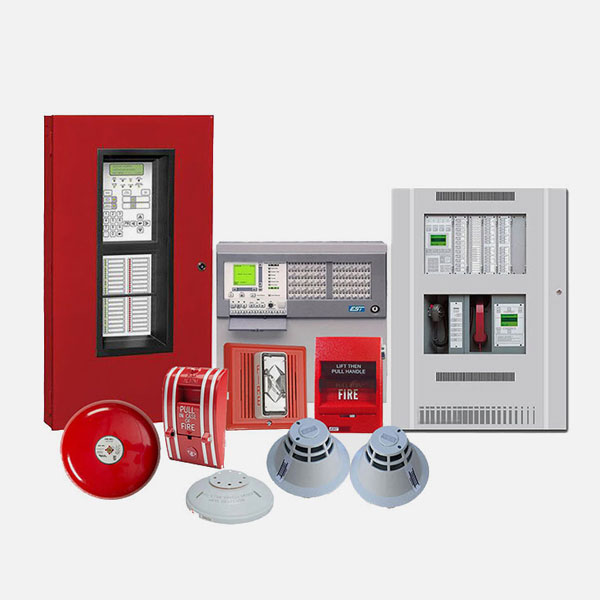
A fire alarm and detection system identifies signs of fire, processes automatic or manual alarm signals and alerts occupants so the emergency response can begin. Depending on the approved design, detection may respond to smoke, heat or flame, while manual call points allow people to raise an alarm directly.
A correctly designed system helps provide early warning, supports evacuation and communicates fire events to responsible personnel. Where required by the approved cause-and-effect plan, monitored interfaces can also initiate defined building-safety functions.
A fire alarm and detection system is a coordinated network that detects possible fire conditions, receives manual alarm signals, evaluates events at a control panel and warns occupants through audible or visual notification. The correct arrangement depends on the building, hazards, occupancy, environment and approved fire-safety design.
Smoke, heat and flame detectors respond to different fire signatures. Selection must consider likely fuels, airflow, ceiling conditions and nuisance sources.
Manual call points allow an occupant to initiate the alarm without waiting for an automatic detector to operate.
Sounders, bells, hooters and visual alarm devices provide notification as required by the approved design and site conditions.
The panel receives and displays events, supervises connected circuits or devices and operates programmed outputs according to the approved cause-and-effect schedule.
Vintex supports project-specific design, supply, installation, testing and commissioning. Final device selection, spacing, zoning, interfaces and programming must follow the approved drawings, specifications and applicable requirements.
Zone-based detection and alarm arrangements for projects where the initiating location is identified by circuit or zone.
Device-level identification, event reporting and programmable cause-and-effect functions for larger or more complex facilities.
Automatic detectors selected around the expected fire signature, environmental conditions and unwanted-alarm risk.
Clearly accessible devices that allow people to initiate a fire alarm manually when fire or smoke is discovered.
Audible and visual notification devices planned around ambient noise, occupancy, coverage and evacuation needs.
Project-defined inputs and outputs for compatible building services, monitoring and suppression controls where approved.
Study the building drawings, occupancy, hazards, specifications and project scope.
Develop the device layout, zoning or addressing, circuiting and cause-and-effect requirements.
Coordinate approved panels, detectors, call points, notification devices, interfaces and accessories.
Execute cabling, device installation, labelling and interface work against approved documents.
Verify devices, circuits, alarms, fault monitoring, programmed logic and documented system operation.
Vintex accepts enquiries for fire alarm and detection systems across the following states, union territories and major cities, subject to project scope, site conditions and logistics.
Visakhapatnam, Vijayawada, Guntur, Tirupati, Nellore, Kurnool, Rajahmundry and Kakinada.
Itanagar, Naharlagun, Pasighat, Tawang, Ziro and Bomdila.
Guwahati, Dibrugarh, Silchar, Jorhat, Tezpur, Tinsukia and Nagaon.
Patna, Gaya, Muzaffarpur, Bhagalpur, Darbhanga, Purnia and Bihar Sharif.
Raipur, Bhilai, Durg, Bilaspur, Korba, Raigarh and Jagdalpur.
Panaji, Margao, Vasco da Gama, Mapusa and Ponda.
Ahmedabad, Surat, Vadodara, Rajkot, Gandhinagar, Bharuch, Vapi, Jamnagar and Bhavnagar.
Gurugram, Faridabad, Panipat, Sonipat, Ambala, Karnal, Hisar and Manesar.
Shimla, Dharamshala, Solan, Baddi, Mandi, Kullu and Una.
Ranchi, Jamshedpur, Dhanbad, Bokaro, Deoghar and Hazaribagh.
Bengaluru, Mysuru, Mangaluru, Hubballi-Dharwad, Belagavi, Ballari, Tumakuru and Davanagere.
Thiruvananthapuram, Kochi, Kozhikode, Thrissur, Kollam, Kannur, Alappuzha and Palakkad.
Indore, Bhopal, Jabalpur, Gwalior, Ujjain, Sagar, Satna and Dewas.
Mumbai, Thane, Navi Mumbai, Pune, Nagpur, Nashik, Chhatrapati Sambhajinagar, Kolhapur, Solapur, Palghar and Raigad.
Imphal, Thoubal, Bishnupur and Churachandpur.
Shillong, Tura, Jowai and Nongpoh.
Aizawl, Lunglei, Champhai and Kolasib.
Dimapur, Kohima, Mokokchung and Wokha.
Bhubaneswar, Cuttack, Rourkela, Sambalpur, Berhampur, Puri, Balasore and Jharsuguda.
Ludhiana, Amritsar, Jalandhar, Mohali, Patiala, Bathinda and Pathankot.
Jaipur, Jodhpur, Udaipur, Kota, Ajmer, Bikaner, Alwar, Neemrana and Bhilwara.
Gangtok, Namchi, Gyalshing, Mangan and Rangpo.
Chennai, Coimbatore, Madurai, Tiruchirappalli, Salem, Tiruppur, Hosur, Vellore and Thoothukudi.
Hyderabad, Secunderabad, Warangal, Karimnagar, Nizamabad, Khammam and Sangareddy.
Agartala, Udaipur, Dharmanagar and Kailasahar.
Lucknow, Noida, Greater Noida, Ghaziabad, Kanpur, Agra, Varanasi, Prayagraj, Meerut, Gorakhpur and Bareilly.
Dehradun, Haridwar, Roorkee, Haldwani, Rudrapur and Rishikesh.
Kolkata, Howrah, Durgapur, Asansol, Siliguri, Haldia and Kharagpur.
Port Blair and other project locations across the islands, subject to logistics.
Chandigarh, Mohali, Panchkula and the adjoining Tricity region.
Silvassa, Daman and Diu.
New Delhi, Central Delhi, North Delhi, South Delhi, East Delhi, West Delhi and NCR project locations.
Srinagar, Jammu, Anantnag, Baramulla, Kathua and Udhampur.
Leh and Kargil, subject to project conditions and logistics.
Kavaratti and other project locations, subject to logistics.
Puducherry, Karaikal, Mahe and Yanam.
Use these answers as planning guidance. The final system should follow the approved project design, site conditions and applicable requirements.
A fire alarm and detection system identifies signs of fire such as smoke, heat or flame, receives manual alarm signals and alerts occupants through audible or visual notification devices.
A conventional system identifies an alarm by detection zone, while an addressable system can identify the individual device or address that generated the event.
Detector selection depends on the fire signature, ceiling and airflow conditions, environment, occupancy, nuisance sources and the approved fire-safety design.
Where the approved cause-and-effect design requires it, a fire alarm system can provide monitored interfaces for equipment such as smoke control, lifts, access control and suppression-system release.
Vintex accepts fire alarm and detection system enquiries across Indian states and union territories, subject to project scope, site conditions and logistics.
Useful inputs include building drawings, occupancy, floor and ceiling details, applicable specifications, device schedule, integration requirements, project location and required scope of work.
Share your drawings, specifications, location and required scope with the Vintex project team.