

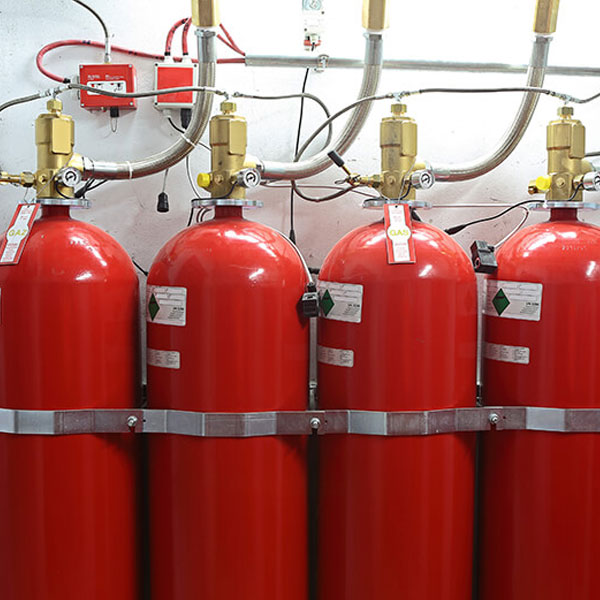
Gaseous fire suppression systems protect suitable special hazards using an engineered extinguishing agent, detection, control and discharge network. Agent selection must consider fire type, equipment, enclosure integrity, environmental requirements and personnel exposure. For carbon-dioxide applications, review Vintex CO₂ fire suppression systems and their required life-safety safeguards.
THE BENEFITS OF GAS SUPPRESSION
Gas suppression systems are designed to protect sensitive areas, such as data centers, server rooms, museums, archives, and other facilities where water-based fire suppression methods could cause significant damage to equipment or valuable assets. These systems work by detecting smoke or fire through various means, such as smoke detectors or heat sensors.
Once a fire is detected, the gas suppression system releases a clean agent or inert gas into the protected area. These agents are chosen for their ability to quickly and effectively suppress a fire without causing harm to people or damage to sensitive equipment. Some common clean agents used in gas suppression systems include: